
Gamifying real social innovation challenges

Gamifying real social innovation challenges Social entrepreneurship is usually taught through theory: definitions, case studies, slides about what a good idea looks like. But young people learn to solve real problems by facing them, not by reading about them. That’s why DEGSE is turning real social challenges into escape game puzzles so players don’t just […]
Attention is the new currency: Can educational games win it back?
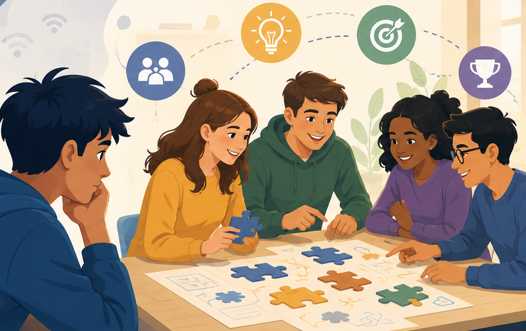
Attention is the new currency: Can educational games win it back? “Your attention is the most valuable resource you own – and everyone wants a piece of it.” From the moment we wake up, our attention is constantly being pulled in different directions. Notifications, social media feeds, short videos, advertisements, emails, and instant messages compete […]
What policymakers can learn from game masters
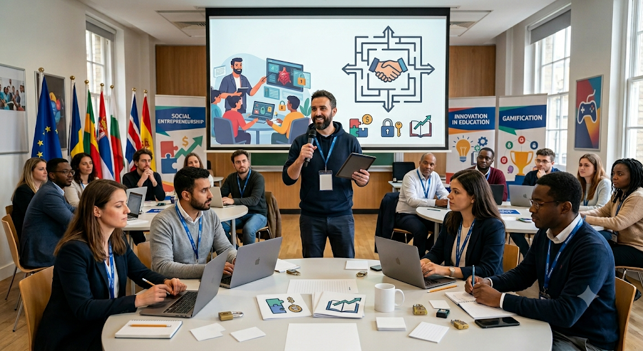
What policymakers can learn from game masters When people think about escape rooms, they usually picture locked doors, hidden clues, and teams racing against the clock. When they think about policymakers, they imagine regulations, strategies, and public consultations. At first glance, these worlds seem far apart. But look closer, and an interesting comparison emerges: both […]
Social entrepreneurship: More than business. It’s about change. Learning civic engagement through Escape Games
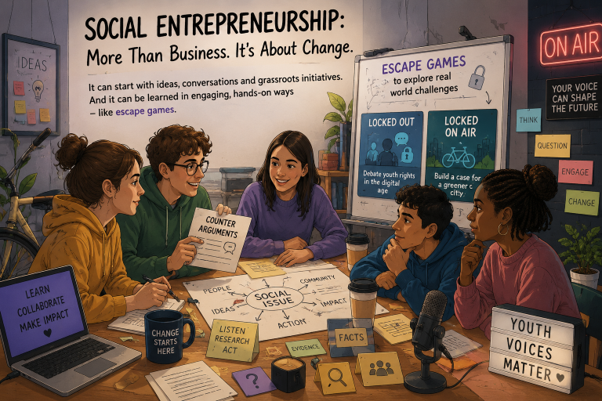
Social entrepreneurship: More than business. It’s about change. Learning civic engagement through Escape Games When people hear the term “social entrepreneurship”, they often immediately think about businesses generating profit to support social causes. While this is one important dimension, social entrepreneurship can take many other forms. At its core, it is about identifying social challenges, […]
Collaborative online learning: Fostering teamwork through digital escape games
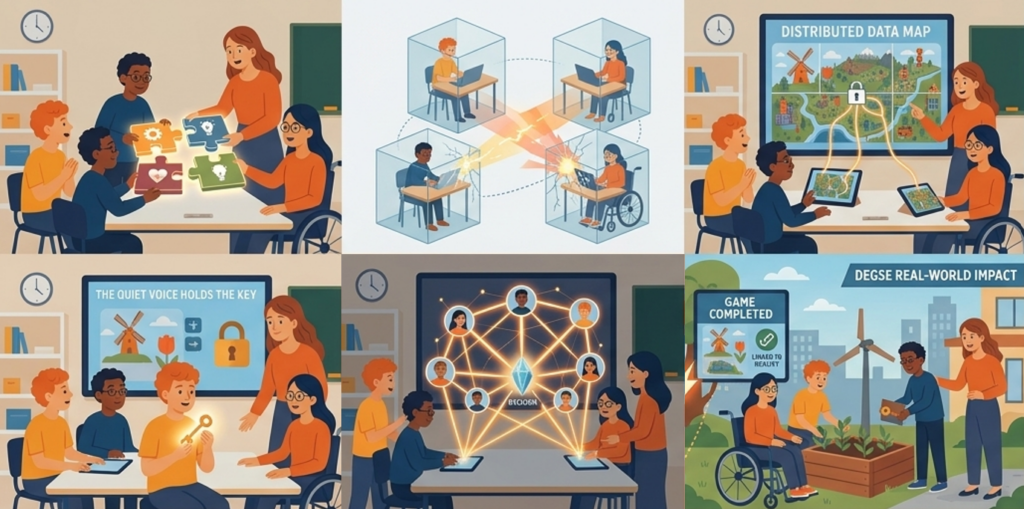
Collaborative online learning: Fostering teamwork through digital escape games People collaborate in different ways: some jump in immediately, ready to lead and think out loud, while others need a moment to quietly observe and process before they contribute their best idea. Good collaborative learning design makes room for various methods and behaviours, and digital escape […]
What the GEM 2025/2026 report tells us about youth, entrepreneurship and social impact

What the GEM 2025/2026 report tells us about youth, entrepreneurship and social impact Entrepreneurship is no longer only about starting a business. For many young people, it is also a way to create social and environmental impact. The Global Entrepreneurship Monitor Global Report shows this clearly. Based on more than 160,000 interviews across 53 economies, […]
Failing forward: Why safe experimentation is essential in social entrepreneurship

Failing forward: Why safe experimentation is essential in social entrepreneurship In traditional education systems, failure is often penalised. Mistakes lower grades. Wrong answers carry consequences. Risk-taking is discouraged in favour of certainty. Yet in the real world, especially in social entrepreneurship, failure is not a weakness. It is a process. If we are preparing young […]
The future of learning is playful: Predictions for 2030
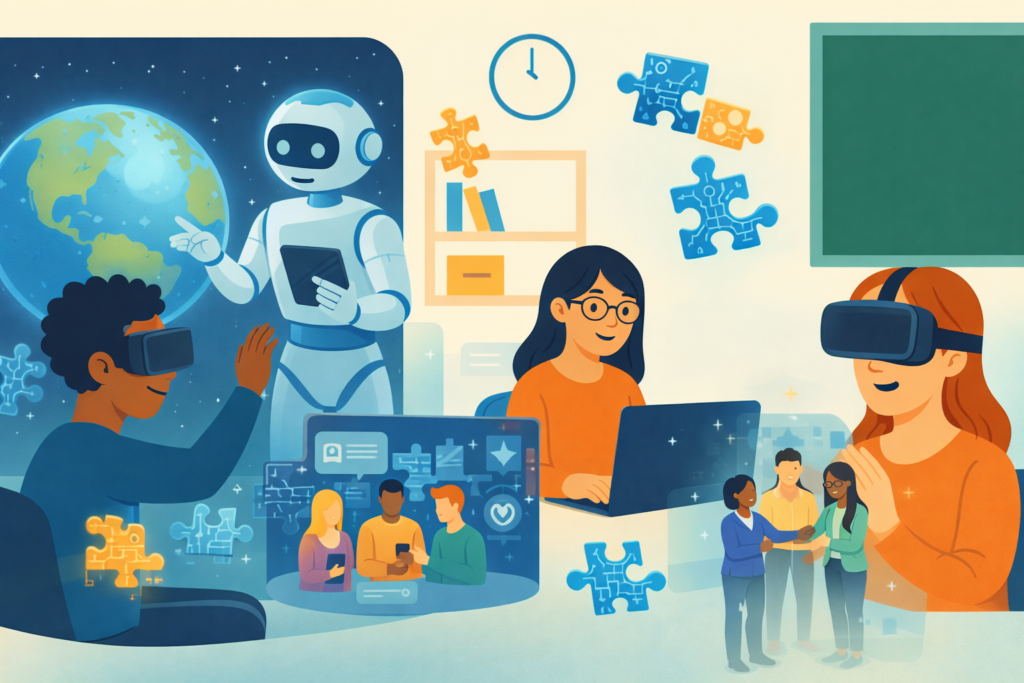
The future of learning is playful: Predictions for 2030 Imagine stepping into a classroom without desks. Instead, you put on a lightweight headset and suddenly you’re standing inside an ancient civilisation, exploring its streets and marketplaces. In another room, a group of young social innovators collaborate with a generative AI mentor to design inclusive enterprises […]
Playing smarter: how AI is reshaping youth social entrepreneurship
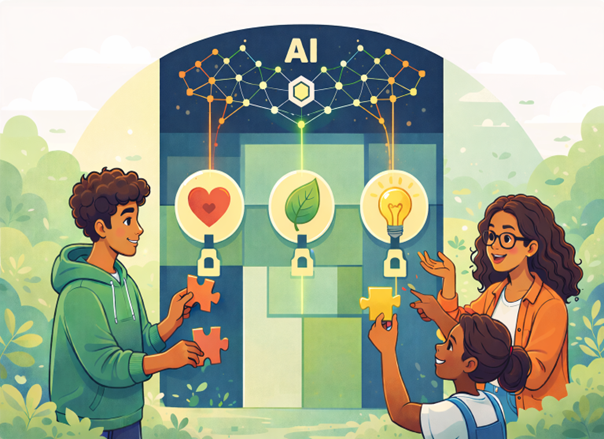
Playing smarter: how AI is reshaping youth social entrepreneurship Artificial intelligence is no longer a distant or abstract concept. For young people engaged in social entrepreneurship, AI is increasingly becoming a practical tool that supports creativity and problem-solving. When combined with game-based learning approaches, such as escape rooms and serious games, AI opens new pathways […]
Inclusive design: Adapting escape games for learners with diverse needs
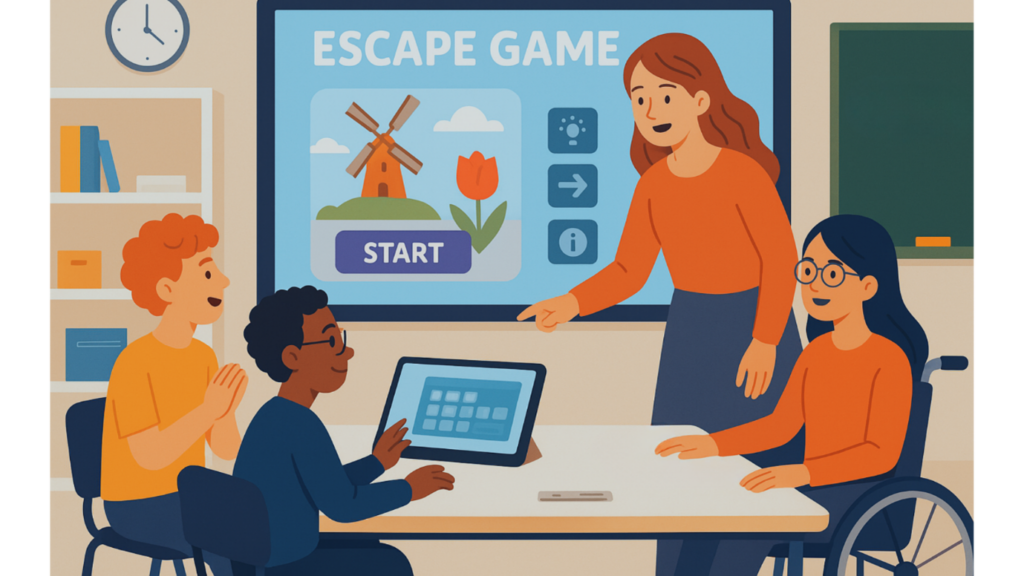
Every learner thinks and learns differently. Some need extra time, others process visually, and many thrive when they can move, play, and collaborate. Inclusive gamification recognises this diversity and turns it into a strength. When digital games are designed to be accessible from the start, they don’t just invite participation; they inspire it.